-
A University of Bristol team leads a half-day workshop in Kuala Lumpur on how Gaussian splatting, spatial audio and generative AI can change the way people engage with the natural world.
-
SIGGRAPH Asia 2026, Kuala Lumpur Convention Centre, 1 to 4 December 2026. Workshop slot to be confirmed by the conference. Attendance requires SIGGRAPH Asia registration.
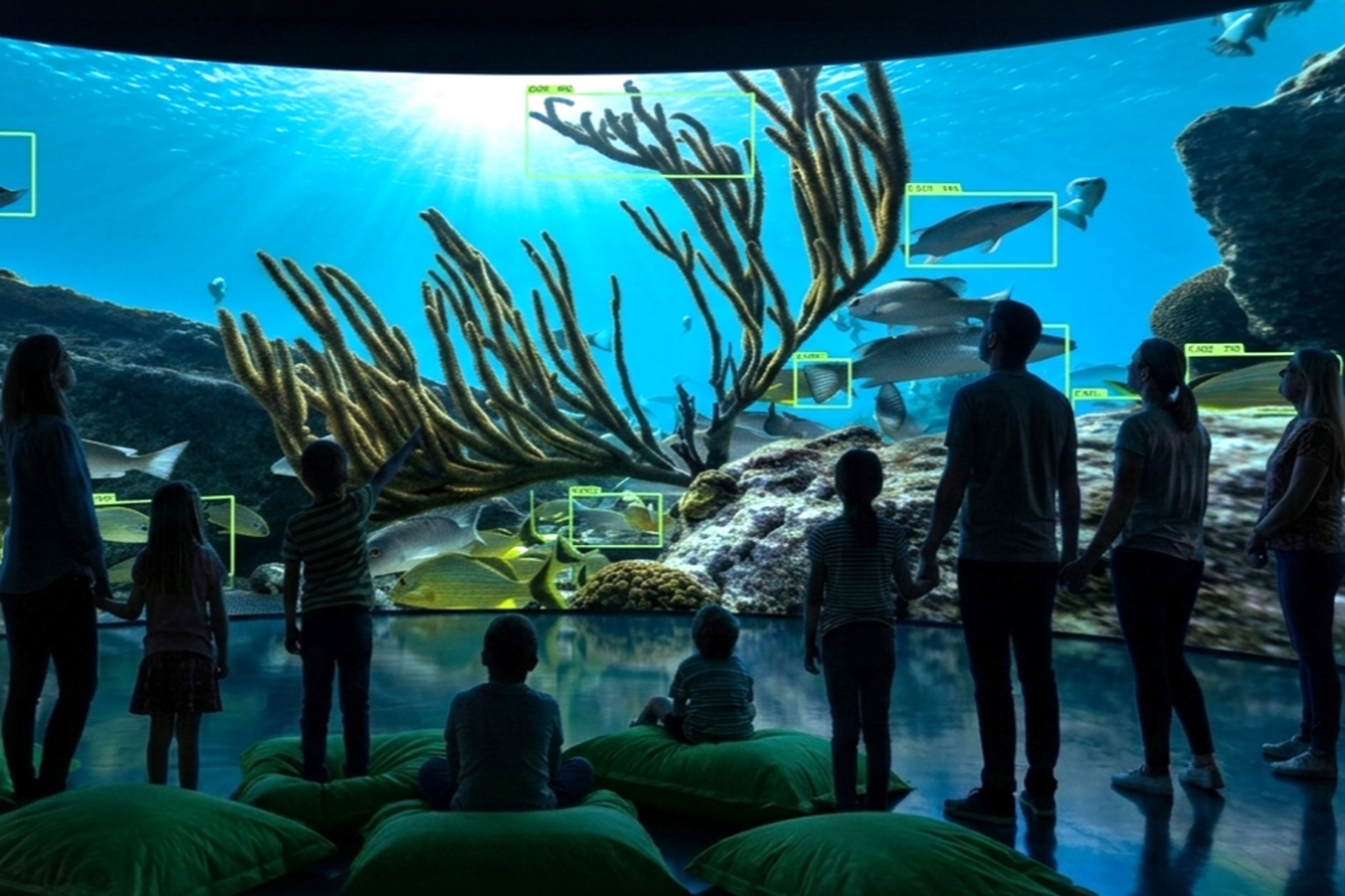
Climate change and biodiversity loss are accelerating, and scientific evidence alone rarely changes how people feel about the natural world. The technologies the computer graphics community builds can now reconstruct a coral reef with photographic fidelity and put a person inside it. Whether that experience changes anything is an open question, and it is the question a University of Bristol team will put to SIGGRAPH Asia this December.
Weaving The Natural World: Immersive and Generative Technologies for Environmental Engagement is a discussion-focused workshop led by Professor Kirsten Cater with Professor David Bull, Director of MyWorld. It brings graphics, computer vision and human-computer interaction researchers together with marine biologists, animal biometrics specialists, education researchers and natural history filmmakers to set a shared research agenda for the next five years.
Five short talks open the session. Professor Steve Simpson presents what reef soundscapes reveal about ocean health. Professor Tilo Burghardt asks what AI animal identification adds to an immersive experience. Dr Matt Adcock of CSIRO shows how biological specimens are captured digitally. Dr Rich Hemming and Dr Géraldine Fauville of the University of Gothenburg present Underwater VR, a prototype that delivers Gaussian splat captures of real coral reefs to a phone in a purpose-built waterproof headset, and the theory of ocean connectedness behind it. Mitch Turnbull reports on how audiences respond to AI-generated representations of living things.
During the break attendees try the technology: the Underwater VR prototype, a social VR experience on marine plastic pollution developed by PhD researcher Jacob Thomas, and OceanXL, the large-scale underwater Gaussian splatting work of MyWorld-funded PhD researcher Haoran Wang with Professor Nantheera Anantrasirichai. The second half is facilitated breakout discussion and a road-mapping session, with the outcomes written up as a workshop report.
The workshop is open to graphics and vision researchers, XR developers, digital artists, environmental and conservation scientists and science communicators. No specialist environmental background is needed.
Contact: Professor Kirsten Cater, kirsten.cater@bristol.ac.uk
"We are delighted that Weaving the Natural World has been accepted as a discussion workshop at SIGGRAPH Asia 2026. This is a critical moment to bring together researchers, artists, technologists and environmental practitioners to explore how immersive and generative technologies can help people engage with the natural world in meaningful ways and support environmental action. We look forward to the conversations, collaborations and new perspectives that will emerge from the workshop."