When and where: SIGGRAPH Asia 2026, Kuala Lumpur Convention Centre, Malaysia. Conference dates 1 to 4 December 2026. Workshop day and time to be confirmed by the conference. Attendance requires SIGGRAPH Asia registration.
About the workshop
Climate change and biodiversity loss are accelerating, and scientific evidence alone rarely moves people. The technologies the SIGGRAPH community builds, from Gaussian splatting and volumetric capture to spatialised audio and generative AI, now make it possible to reconstruct natural environments with photographic fidelity and to put people inside them. Whether those experiences change how people relate to the natural world is an open question.
This workshop brings together researchers and practitioners from graphics, computer vision, XR, HCI, marine biology, animal biometrics, education research and natural history filmmaking to identify the shared research challenges, opportunities and ethical questions in this space, and to set out a research agenda for the next five years.
Questions we will work on
- How do we capture, reconstruct and render living environments, including scattering, dynamic underwater scenes, at scale and in real time on consumer hardware?
- When AI-generated nature becomes indistinguishable from footage, how should captured, generated and hybrid content be combined, labelled and trusted?
- How can spatial audio and ecological monitoring data become experiential inputs rather than background?
- Which evaluation methods capture lasting effects on nature and ocean connectedness rather than short-term novelty?
Programme
Short provocation talks, hands-on demos, facilitated breakout groups and a road-mapping session. Ten-minute talks are each followed by five minutes of questions.
| Time | Session | Lead |
| 0:00 | Welcome and framing | Kirsten Cater |
| 0:10 | Reef acoustic ecology: what spatialised sound reveals about marine health | Steve Simpson |
| 0:25 | AI and animal biometrics in immersive nature contexts | Tilo Burghardt |
| 0:40 | Digitally capturing biological specimens | Matt Adcock |
| 0:55 | Underwater VR: Gaussian splatting of real coral reefs, WebXR and ocean connectedness | Rich Hemming and Geraldine Fauville |
| 1:20 | Audience responses to an AI-generated AR bio-acoustic 3D model | Mitch Turnbull |
| 1:35 | Break and demos | Rich Hemming, Jacob Thomas, Haoran Wang, Nantheera Anantrasirichai |
| 2:00 | Facilitated breakout discussion | All |
| 2:50 | Research road-mapping: the next five years | All |
| 3:20 | Close and next steps | Kirsten Cater and David Bull |
The talks
Reef acoustic ecology: what spatialised sound reveals about marine health. Steve Simpson. Healthy reefs are loud; degraded reefs fall quiet. Steve presents the hydrophone array and spatialised sound work through which reef soundscapes are used to measure ecosystem health and to drive acoustic restoration, and the design of immersive acoustic experiences for audiences at major policy events including COP27. The talk opens the question of how reef acoustic data might interact with immersive VR environments.
AI and animal biometrics in immersive nature contexts. Tilo Burghardt. Automated individual animal identification in the wild now works across species, from camera traps to underwater footage. Tilo asks what happens when species and individual recognition is placed inside an immersive experience: what it adds to engagement, where it misleads, and what the SIGGRAPH community can contribute to imageomics and conservation AI.
Digitally capturing biological specimens. Matt Adcock. Museum and field specimens are a foundational record of biodiversity. Matt presents CSIRO work on spatial AI, computer vision and interactive graphics for capturing and interacting with biological specimens and environments, and the pipeline from capture to experience across conservation, heritage and agriculture.
Underwater VR: Gaussian splatting of real coral reefs, WebXR and ocean connectedness. Rich Hemming and Geraldine Fauville. Geraldine sets out the theoretical model of Underwater VR and ocean connectedness, in which double immersion, physically in water and virtually on a reef, supports connectedness, and the plausibility limitation participants identified in computer-generated reefs. Rich presents the Bristol prototype built to address it: a WebXR Gaussian splat system delivering photorealistic captures of real reefs to a consumer phone in a purpose-built waterproof headset, with no dedicated XR hardware. The talk closes with the open technical and evaluation questions.
Audience responses to an AI-generated AR bio-acoustic 3D model. Mitch Turnbull. A feasibility study comparing AI-generated and human-led design and animation of a 3D bio-acoustic AR model (working with Bramble Media’s EarthSongs IP). Mitch presents the A/B findings as a starting point for research into how audiences respond to creative content that uses AI tools to represent biological forms, and what this means for trust in generated nature.
Demos during the break
- Underwater VR: photorealistic Gaussian splat captures of real coral reefs, delivered through WebXR to a phone in a purpose-built waterproof headset. Reef capture data from the Sweet-Corals dataset (WildFlow, CC BY 4.0). Rich Hemming.
- Digitising Traces of Pollution: a social VR experience for participatory reflection on marine plastic pollution. Jacob Thomas.
- OceanXL: large-scale underwater 3D Gaussian Splatting via block partitioning and adaptive pruning. Haoran Wang and Nantheera Anantrasirichai.
Speakers and organisers
Prof Kirsten Cater, University of Bristol (lead organiser).

Professor of Human-Computer Interaction and Associate Pro-Vice-Chancellor for Education and Students (Science and Engineering). Her research focuses on immersive technologies and digital experiences that enhance how people engage with each other and their environments. She has led major interdisciplinary research programmes funded by national, international and industry partners totalling £75 million, and her immersive work has received international recognition including the IDFA Best Digital Storytelling Award, exhibitions at the Venice Film Festival and inclusion in Forbes’ Top 50 VR Experiences. She was an ACM SIGGRAPH Professional and Student Chapters Committee member (2002–2007) and SIGGRAPH International Resources Chair (2006).
Prof David Bull, University of Bristol (organiser).

Professor of Signal Processing and Fellow of the IET and IEEE. David is Director of the UKRI-funded MyWorld Strength in Places Programme (£46m), which brings together universities and industry to develop, test and commercialise innovative creative technologies such as AI, immersive media and next-generation content production tools. He works in visual communications and computer vision, with current activities in optimised video compression for streaming, broadcast and surveillance, and optimised workflows for media production including denoising and enhancement of low-light video. He has published over 500 papers and patents, several licensed and exploited commercially, and co-founded ProVision Communication Technologies Ltd, serving as Director and Chairman until its acquisition in 2011.
Dr Rich Hemming, University of Bristol (organiser, speaker).

Senior Research Associate in Immersive Technologies at the Centre for Sociodigital Futures. Rich explores immersive technologies as objects of interdisciplinary inquiry, examining how XR systems and spatial media shape sociodigital futures. At CenSoF he contributes to experimental Technical Affordance Projects across immersive technologies and AI, combining hands-on technical prototyping with critical collaborative research. He is the developer of the Underwater VR prototype: a WebXR Gaussian splat system built on Three.js 0.169, serving photorealistic captures of real coral reef environments to a consumer Samsung Android phone in a purpose-built waterproof HMD using Google Cardboard optics, with no dedicated XR hardware required. The prototype uses reef capture data from the Sweet-Corals dataset (WildFlow, CC BY 4.0); the team is also developing its own reef captures. His doctoral research at Royal Holloway, University of London explores procedural audio driven sonification and spatial sound for augmented reality navigation.
Jacob Thomas, University of Bristol (organiser, demo).

PhD Researcher in Immersive Technologies and Arts. Jacob combines human-computer interaction with ecocriticism; his work examines and evaluates VR as a provocative medium for representing and discussing environmental problems and human-nature relationships. Moving beyond top-down behaviour change interventions, his PhD develops guidelines for virtual experience design and research practices that frame immersive virtual nature experiences as participatory spaces for reflection on complex ecological issues. He is currently evaluating a prototype social VR experience that supports critical discussion of the social and cultural aspects of ecology and waste in the context of marine plastic pollution.
Mitch Turnbull, University of Bristol and Bramble Media (organiser, speaker).
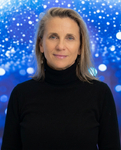
Senior Research Associate in Immersive Natural History Experiences. Mitch focuses on the capacity of immersive technologies to enhance engagement with the natural world. She joined the University in 2024 with 30 years’ award-winning experience in natural history and conservation content creation for broadcasters, brands and organisations including BBC Earth, National Geographic, the UN, Apple and Meta. Her projects include Listen to Bristol, a community co-created feasibility study exploring ecological citizenship and digital tools in underrepresented urban communities; location-based XR exhibition audience research; and a feasibility study of audience responses to an AI-generated AR bio-acoustic 3D model.
Dr Matt Adcock, CSIRO, Australia (speaker).
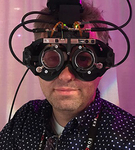
Research Team Leader, Interactive Imaging, Technology Research Unit, CSIRO (Australia’s national science organisation), and a Principal Experimental Scientist in Physical AI. Matt uses spatial AI, computer vision, interactive computer graphics and robotics to build systems that connect digital and physical worlds. His work spans heritage, conservation, agriculture, energy, health, mining and manufacturing, and he has supported numerous technology start-ups. He has published over 100 peer-reviewed papers, holds degrees from ANU, the University of South Australia and MIT, and has received multiple innovation awards including being named a Gold Disruptor by the Australian Computer Society for his work on augmented reality. Matt was Real-Time Live! Chair for SIGGRAPH Asia 2022.
Dr Géraldine Fauville, University of Gothenburg, Sweden (speaker).
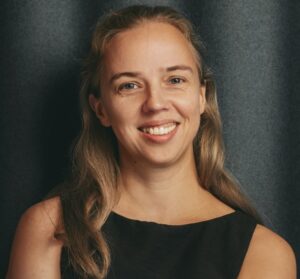
Assistant Professor at the Department of Education, Communication and Learning. With a double background in marine biology and in education and IT, her research focuses on how immersive media can contribute to marine education and promote ocean and environmental literacies. In her current research, she investigates the use of underwater virtual reality for marine education. Previously, she was a Postdoctoral Research Fellow at the Virtual Human Interaction Lab at Stanford University, in charge of the research on environmental education.
Prof Steve Simpson, University of Bristol (speaker).
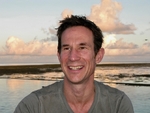
Professor of Marine Biology and Global Change. Steve is a world leader in marine bioacoustics, exploring how ocean soundscapes signal reef health and how acoustic restoration can drive ecological recovery. His findings have shaped conservation policy globally and featured prominently in the BBC’s Blue Planet II and Our Changing Planet. He has also worked on natural history films and series for Apple TV, Netflix, National Geographic, Disney and YouTube, and has communicated this work in immersive public contexts including a live hydrophone demonstration at COP27.
Prof Tilo Burghardt, University of Bristol (speaker).

Professor of Computer Vision and Animal Biometrics. Tilo is a pioneer in automated individual animal identification in the wild; his AI research spans ecology, conservation, imageomics, taxonomics, animal husbandry and smart ethical farming. He organises the international CamTrapAI workshop series. His work over the last 20 years has received multiple international award nominations (including CVPR 2025 and 2026) and has been published in over 100 scientific papers. He is also an award-winning educator and leads teaching and learning as School Education Director in Computer Science.
Prof Nantheera Anantrasirichai, University of Bristol (demo).

Professor of Visual Computing. Nantheera (Pui) specialises in image processing, computer vision and AI for challenging visual data. Her research focuses on image and video analysis and enhancement, including low-light and underwater video processing, atmospheric turbulence removal, 3D modelling and Gaussian splatting, InSAR for earth observation, and medical image analysis. She is Director of the MSc Immersive Technologies (AR/VR) programme and Co-Director of the Bristol Vision Institute.
Haoran Wang, University of Bristol (demo).
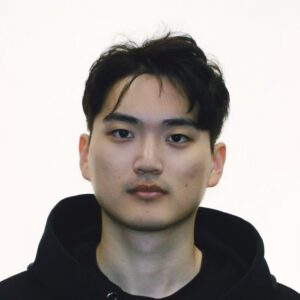
PhD researcher funded by MyWorld. His research interests lie in computer vision for 3D reconstruction, and he has pioneered physics-based 3D Gaussian Splatting for underwater scenes. His work has been published at SIGGRAPH Asia, CVPR, BMVC and WACV.
Who should come
Graphics and vision researchers, XR developers, digital artists, environmental and conservation scientists, science communicators, and anyone building or evaluating immersive experiences of the natural world. No specialist environmental background is needed.
Outputs
The breakout and road-mapping sessions produce a shared research agenda. The organising team will publish a workshop report on this page and share it with attendees.